REVIEW · PORTLAND
Portland’s Ultimate 12 Historic Bridges’ Scenic Boat Tour
Book on Viator →Bookable on Viator
If you love bridges, this cruise turns them into characters. It’s a private Willamette River ride built around 12 historic spans, with guide narration and great photo angles from the water.
I like how the tour mixes engineering details (cantilevers, trusses, lift spans) with real Portland scenes you can actually see from the river. I also love the comfort touches—on my run, Captain Nate had heated seat blankets ready when it got chilly.
One thing to consider: it’s tight timing. This is about 2 hours, and on busy holiday weekends you may want a dinner buffer in case you run a bit later.
In This Review
- Key highlights you’ll care about
- How this Portland 12-Bridge Boat Tour Works (And Why It Feels Easy)
- Meeting at Willamette Park: Your Launch Point on the River
- Downtown Views and Oaks Bottom Wildlife Refuge: Nature Meets the Bridge City
- Ross Island Bridge and the Engineering Behind Portland’s Moves
- Tilikum Crossing: A Bridge Built for Transit and People
- Hawthorne Bridge Vertical Lift and the Feeling of Downtown “Play”
- Steel Bridge: The Multimodal Masterclass
- The Portland Sign, the Sternwheeler Museum, and Why the Water Makes It Romantic
- Morrison, Fremont, Broadway, and Sellwood: A Bridge Road Trip Without Driving
- Burnside Bridge, Saturday Market Views, and Old Town’s Underground Stories
- North Portland: St. Johns Bridge and Cathedral Park Under the Gothic Arches
- Oregon Iron Company, Oregon’s Industrial Past, and Why the River Was the Highway
- Oaks Park, Pearl District Warehouses, and South Waterfront Modern Portland
- Elk Rock and Poets Beach: Portland’s Weird-Bright Side
- Willamette Falls Mention: Ask What You’ll Actually See in Your 2 Hours
- Price and Value: $395 for Up to 6 People Makes Sense Here
- Captains, Narration, and the Small Comforts That Matter
- Who This Tour Fits Best (And Who Might Want a Different Day Plan)
- Should You Book This 12 Historic Bridges Boat Tour?
Key highlights you’ll care about
- A private boat for up to 6 people, so the narration and pace fit your group
- No getting out at landmarks: you cruise by and focus on views plus guide storytelling
- Bridge engineering explained in plain language, from lift bridges to tied-arch spans
- Iconic Portland visuals like the Portland sign, Burnside Bridge views, and Tom McCall Waterfront area
- Real comfort options, including heated seat blankets reported by recent guides
- BYOB on the water, with life jackets and a USCG-licensed captain
How this Portland 12-Bridge Boat Tour Works (And Why It Feels Easy)
This is a private scenic boat tour on Portland’s Willamette River, designed for a small group of up to 6 people. You meet at Willamette Park on S Macadam Ave, then spend about 2 hours cruising past major bridge landmarks with live narration.
The big practical win is that you skip the usual Portland “where do we park” problem. From the water, you get a moving viewpoint of the skyline and river districts that’s hard to recreate on foot.
Also, the tour is set up so you stay on the boat. Included details call it a cruise with views with no stops, meaning you’re getting the best part—looking and listening—without time-wasting walk-offs.
You can also read our reviews of more boat tours in Portland

Meeting at Willamette Park: Your Launch Point on the River
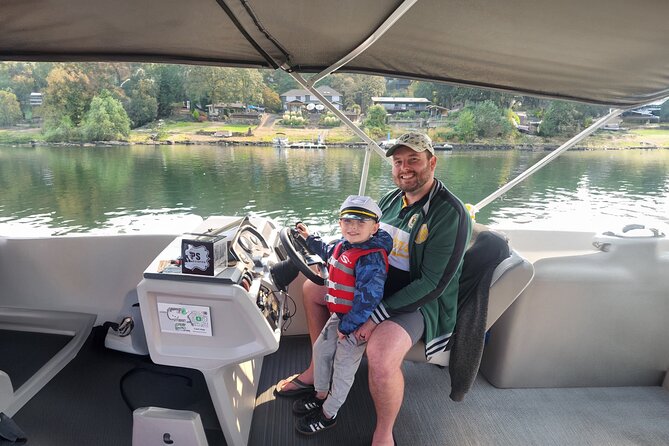
You start at Willamette Park, 6500 S Macadam Ave, Portland. From there, the ride quickly gets you into the river view zone where bridges, waterfront parks, and downtown architecture start lining up.
You’ll get a mobile ticket, and the tour includes life jackets. The boat is captained by a USCG licensed captain, and there’s an Oregon registered tour guide for the narration.
If you’re planning around sunset, this is a good tour shape because the Willamette gives you long, photogenic angles. The Portland sign is specifically described as glowing with reflections on the river during twilight and night cruises, so timing matters here.
Downtown Views and Oaks Bottom Wildlife Refuge: Nature Meets the Bridge City
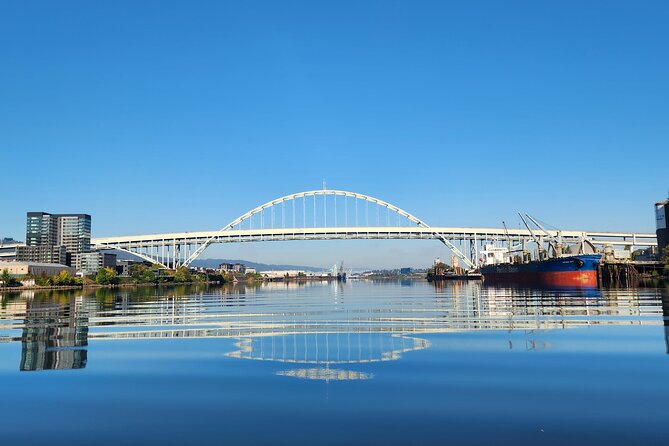
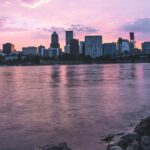
Early on, you’ll get skyline views of downtown Portland from the Willamette River. It’s the kind of introduction that helps you understand where all the bridges connect in the big picture.
Next up is a nature break: Oaks Bottom Wildlife Refuge, about 141 acres along the east bank near Sellwood. It was Portland’s first wildlife refuge in 1988 and became the city’s first migratory bird park in 2004, which is a helpful bit of context when your guide points out birds and wetlands.
What I like about this segment is the contrast. You’re on a river known for bridges, and then suddenly the view shifts to a wildlife refuge with habitat that filters the river and supports bird life.
A small consideration: wildlife viewing depends on conditions. You’re cruising by rather than hiking, so if birds are quiet that day, your experience will lean more toward scenery and habitat than spotting species.
Ross Island Bridge and the Engineering Behind Portland’s Moves
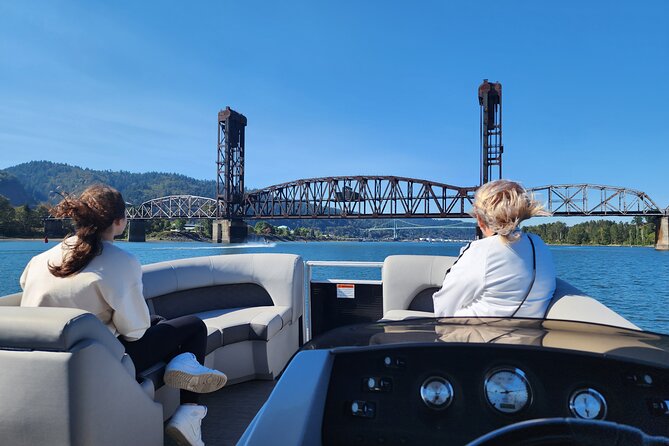
Then the tour leans into what makes Portland’s bridge collection so fun: structural variety. Ross Island Bridge is a cantilever deck truss span carrying US Route 26 across the river, opened in 1926.
This bridge matters because the story isn’t just name recognition. It honors Oregon pioneer Sherry Ross, and the description notes it’s a rare bridge type in Oregon even though it looks like a different shape from a distance.
If you like details, this is the kind of stop where narration helps you read the bridge like a diagram. You’ll likely spot how the cantilever deck truss design creates the rigid “hold” over the river.
Tilikum Crossing: A Bridge Built for Transit and People
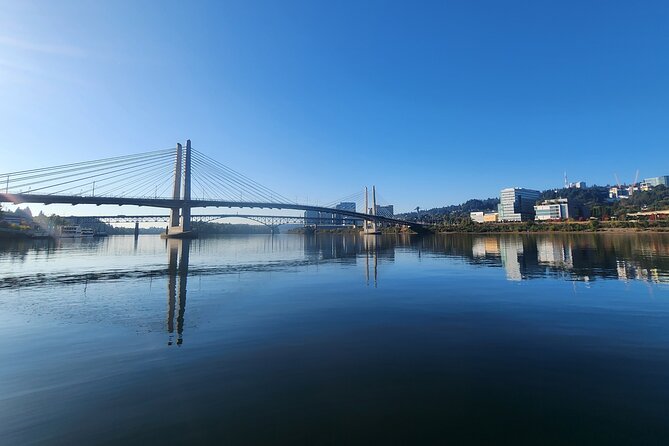
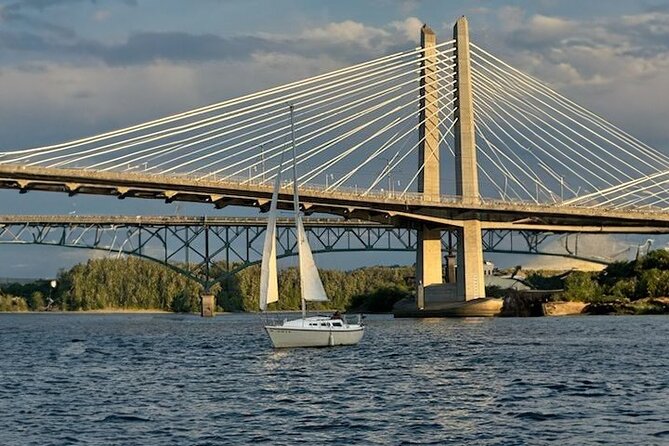
One of the most interesting bridges on the route is Tilikum Crossing, also called the Bridge of the People. It spans 1,720 feet across the Willamette River, and the tour’s description highlights that it’s designed primarily for MAX Orange Line light rail.
It also serves pedestrians and bicyclists in a separate lane, plus TriMet buses and the Portland Streetcar. The key detail: it’s not for private motorized vehicles, which is a big part of why it feels different from the surrounding bridges.
From the water, you get a clear sense of how Portland has carved transit lanes into its river crossings. If your trip includes kids or anyone who thinks bridges are just for cars, this one usually reframes the whole idea.
You can also read our reviews of more historical tours in Portland


Hawthorne Bridge Vertical Lift and the Feeling of Downtown “Play”
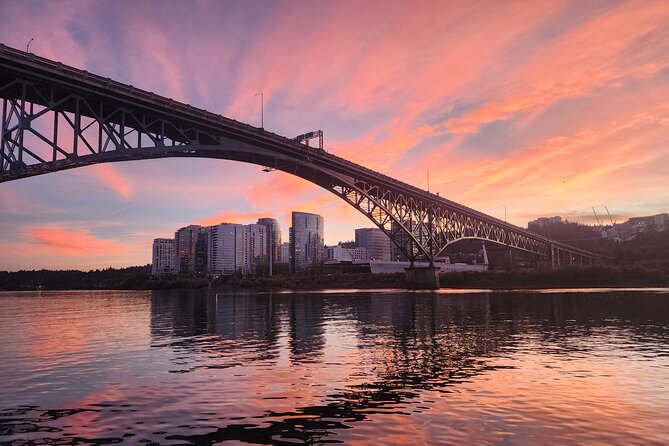
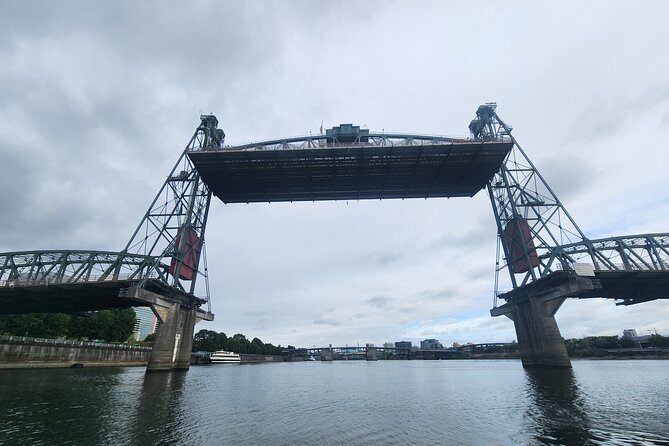
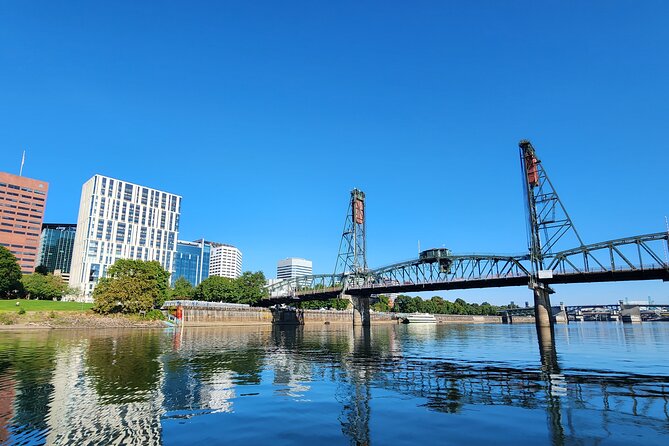
Next is Hawthorne Bridge, a vertical-lift truss bridge joining Hawthorne Boulevard and Madison Street. The description calls it the oldest vertical-lift bridge in operation in the United States and the oldest highway bridge in Portland.
This is a great bridge for listening closely. Your guide narration should connect why a lift design matters in a river city—because waterways and river traffic aren’t background noise; they shape how bridges function.
Even if you don’t see a lift in action, the structure’s form reads clearly from the river. It’s the kind of span you can photograph from multiple angles without leaving your seat.
Steel Bridge: The Multimodal Masterclass
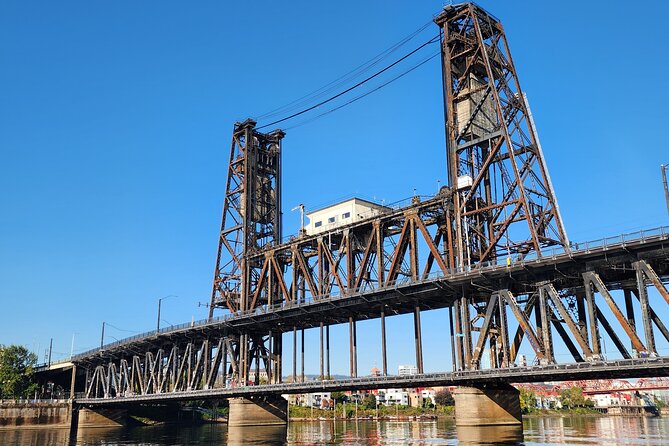
The Steel Bridge is one of the tour’s biggest engineering moments. It’s a through truss, double-deck vertical-lift bridge across the Willamette River, opened in 1912.
Two decks, two different jobs: the lower deck carries railroad and bicycle/pedestrian traffic, while the upper deck carries road traffic plus light rail. The description also notes it’s the only double-deck bridge with independent lifts in the world.
If you’re thinking about value, this is a big reason this tour is worth your time. You’re not just seeing one bridge type; you’re seeing how Portland layers modes of transportation into a single structure.
The Portland Sign, the Sternwheeler Museum, and Why the Water Makes It Romantic
A quick shift brings you to Portland’s iconic Portland Oregon sign on top of the White Stag Building near Burnside Bridge. The description explains how it transformed after being acquired by the city in 2010 and became a symbol of Portland identity.
From the river, it’s a focal point against the urban backdrop, and the lights can reflect on the water at twilight. It’s the rare Portland landmark that looks better from a boat than it does in photos standing still on a sidewalk.
From there, the tour also includes time near the Oregon Maritime Museum Sternwheeler. It’s a historic vessel docked by the river, restored with a classic paddlewheel look, and it serves as both museum and tribute to Oregon’s maritime past.
If you’re the type who likes “why does that boat matter,” your guide should help connect the sternwheeler to the region’s river transport era. The paddlewheel form is a fun visual break after all the steel bridge geometry.
Morrison, Fremont, Broadway, and Sellwood: A Bridge Road Trip Without Driving
Now you get the bulk of the bridge run. The tour description includes Morrison Bridge, a bascule bridge completed in 1958 and the third bridge at roughly the same site. It’s one of Portland’s most heavily used bridges, and it was added to the National Register of Historic Places in 2012.
There’s also a note worth aiming for if you’re on an evening departure: the Morrison Bridge lights up at night with colors that change daily. Even if the lighting changes, the general idea is that bridges can become part of Portland’s nighttime art scene.
Next is Fremont Bridge, a steel tied-arch bridge carrying I-405 and US 30 between downtown and North Portland. The description points out that it has the longest main span of any bridge in Oregon and the second longest tied-arch in the world.
Then the Broadway Bridge follows, built in 1913 and described as Portland’s first bascule bridge. It’s Rall-type bascule design and noted as the longest span of that bascule type in the world, which gives you a nice “how rare is this” talking point.
Finally, you’ll see Sellwood Bridge, a deck arch bridge. The current span opened in 2016 replacing a 1925 crossing, and the original bridge is described as Portland’s first fixed-span bridge and the busiest two-lane bridge in Oregon.
This section is where I think the tour earns its name. You’re not just collecting famous names; you’re seeing a timeline of design styles and learning why each bridge solved a different river-and-city problem.
Burnside Bridge, Saturday Market Views, and Old Town’s Underground Stories
The tour brings in views of Burnside Bridge from the water. Nearby, you also get sightlines toward Portland Saturday Market at Tom McCall Waterfront Park under Burnside.
The description spells out why it’s such a Portland institution: it runs every weekend from March through December, has over 400 local artisans, and draws around 750,000 visitors each year. It’s also described as the largest continuously operated outdoor market in the United States.
From a boat, the market is more about mood than shopping. Still, it helps you understand how the waterfront serves both daily life and weekend craft culture.
The cruise also references Old Town Portland and the lore of the Shanghai Tunnels. The tour’s description frames the tunnels as late 19th to early 20th century lore about men being forced into service aboard ships, with guided tours available on land.
I’d treat the tunnels as a “for later” add-on rather than something you experience directly on the cruise. But it’s a neat story thread when your guide helps you connect river access to the city’s darker chapters.
North Portland: St. Johns Bridge and Cathedral Park Under the Gothic Arches
After you’ve worked through the downtown core, the route heads into the north-side bridge story with St. Johns Bridge. It’s described as the only suspension bridge in the Willamette Valley and one of three public highway suspension bridges in Oregon.
The bridge carries US Route 30 Bypass between the Cathedral Park area in North Portland and Northwest industrial neighborhoods. Seeing it from the river makes the span feel larger and more “open sky” than most bridges in the center city.
Then you look toward Cathedral Park, named for the Gothic arches under the bridge. The description includes some serious local history: it was once part of the city of St. Johns, and the area under the bridge is tied to the 1949 murder of Thelma Taylor.
The good news is the outcome. The park opened in 1980 and the description says residents raised $7.5 million in the 1970s to transform the area from dumping ground into a community park. That long arc is exactly the kind of context that makes a bridge tour more than photos.
Oregon Iron Company, Oregon’s Industrial Past, and Why the River Was the Highway
Along the cruise, you’ll also see the story of the Oregon Iron Company. The description says it was established in 1865 and was the first iron smelting company west of the Rocky Mountains.
Even with early struggles, it was reborn twice, peaking in production in 1890, and then ceased smelting by 1894 due to economic pressures. The legacy is described as shaping the city of Lake Oswego and shifting iron production toward real estate development.
This is one of those details that changes how you look at the riverbanks. Bridges are visible, but industry is often invisible until you have a guide connect past use to current streets and buildings.
Oaks Park, Pearl District Warehouses, and South Waterfront Modern Portland
The tour description includes several Portland districts, and the boat viewpoint ties them together.
Oaks Park appears as a historic amusement park established in 1905, known for a preserved wooden carousel with hand-carved horses. From the river, it’s a nostalgic break from steel, with seasonal events mentioned in the description.
Then the cruise references the Pearl District, highlighting how old warehouses with brick facades sit next to modern Portland change. From water level, the old warehouse windows and columns look different than they do from sidewalk height.
On the south side, you’ll pass South Waterfront, described as one of the largest urban redevelopment projects in the United States built from former industrial brownfields. The description emphasizes transit connections by Portland Streetcar and MAX Orange Line, and it calls out SW Moody Station as a key hub.
It also mentions the Portland Aerial Tram linking the district to OHSU atop Marquam Hill, which can give you standout city-and-river views depending on where you’re positioned during that part of the cruise.
Elk Rock and Poets Beach: Portland’s Weird-Bright Side
Portland has its serious side. This tour also gives you its geology and its creativity.
You’ll cruise past Elk Rock and Elk Rock Island, described as an ancient volcano rising from the river’s edge. The visuals are “old Oregon” against modern bridges—rough cliffs and greenery meeting city water.
Then there’s Portland Poets Beach, connected to the Human Access Project. The description says it started as a 2000 effort without proper signage or access, and then HAP volunteers added cuts through basalt rock and artistic elements in 2014.
One detail that’s memorable: the beach includes poetry excerpts from children and Chinook Jargon engravings. It also notes that in 2017 Mayor Ted Wheeler even took a swim there, and the park later became the city’s first pop-up beach with lifeguards, though lifeguards are described as gone now.
This is exactly where a river cruise feels different from a walking tour. The art and the geology come at you from different angles, and you get to keep your eyes moving.
Willamette Falls Mention: Ask What You’ll Actually See in Your 2 Hours
The description includes text about Willamette Falls, including the claim that it’s the second largest waterfall in the United States and that the tour sees it close-up with no crowds and no parking problems.
At the same time, this experience is framed as a 2-hour private bridge-and-water cruise around Portland. Since the route timing is tight, don’t assume that every departure includes Willamette Falls viewing.
My practical advice: when you book, ask your operator a simple question—what are the exact highlights on your departure date and time. The more you clarify up front, the less you’ll be stuck wondering once you’re on the water.
Price and Value: $395 for Up to 6 People Makes Sense Here
The price is $395 per group, up to 6 people, for about 2 hours on the water. On paper, that looks pricey until you do the math.
If you fill the boat with 6 people, your cost per person drops a lot compared with per-person sightseeing tours. And because it’s private, you get your own pace and your own narration focus instead of sharing the guide’s attention with a big crowd.
This is also a tour where the setting reduces “hidden costs.” No parking garages to fight, no long public transit chains, and less time wasted getting views from the right spots on the right streets.
Captains, Narration, and the Small Comforts That Matter
This tour lives or dies on the captain and guide. In the feedback you shared, Captain Steve and Captain Charlie/Charles are credited with clear, factual bridge stories, plus a good sense of timing and humor.
Captain Nate is specifically mentioned for being great, knowledgeable with a fun edge, and for having heated seat blankets ready when it got cold. That matters because a river cruise can feel cooler than you expect, especially as the light changes.
If your goal is a relaxed, serene experience with strong explanations, you’ll probably appreciate the style. One caution from the same set of experiences: if the day runs late on heavy holiday scheduling, your guide might stick to a more straightforward run and not do extra group chat. If that would annoy you, plan your evening tightly—but still add a little buffer.
Who This Tour Fits Best (And Who Might Want a Different Day Plan)
This is a strong fit if you:
- want 12 historic bridges in one outing without driving bridge to bridge
- like photography from a moving viewpoint, especially for the Portland sign and bridge lighting
- are traveling with a small group or family and want private pacing
- care about how a city actually works, not just what it looks like
It might be less ideal if you:
- need a super long sightseeing day, since it’s about 2 hours
- expect lots of walking and stops, because this is primarily views from the boat
- hate being flexible on timing around weekend congestion
Should You Book This 12 Historic Bridges Boat Tour?
If you want a Portland “best of the river” experience with private comfort and real bridge storytelling, I think this is a smart booking. The combination of engineering variety, skyline access, and waterfront district views hits a sweet spot for first-timers and repeat Portland fans.
Book it if your group can commit to a 2-hour window and you’re willing to bring your own snacks and drinks. Skip it only if you’re expecting lots of land stops, or if you need guaranteed viewing of Willamette Falls in that exact 2-hour slot—ask first, then decide.
You Might Also Enjoy
More Boat Tours & Cruises in Portland
More Tours in Portland
- The Real Portland Tour: City and 3 Lighthouses Historical Tour with a Real Local
★ 5.0 · 1,448 reviews
More Tour Reviews in Portland
- The Real Portland Tour: City and 3 Lighthouses Historical Tour with a Real Local
★ 5.0 · 1,448 reviews