REVIEW · PORTLAND
Forest Park Carbon Gravel Bike and E-Bike Tour
Book on Viator →Operated by Cycle Portland Bike Tours & Rentals · Bookable on Viator
City bikes, forest air, and easy big views. Forest Park delivers the kind of green you don’t get in most downtown rides, and the Leif Erikson Trail gravel gives you a real, satisfying bike texture under your tires. This tour mixes street riding with trail time, so if you hate any hills at all, you’ll want the e-bike to keep it fun.
I like that the tour is built for comfort and flow: small group size (max 12), a simple meeting point back at Cycle Portland, and a schedule that lands you in North Portland without rushing. The ride also has a friendly learning vibe, and one guide named Charlotte stood out for being patient and fun, especially if you’re newer to cycling or just want things clearly explained.
One thing to consider is weather. This experience requires good conditions, and if Portland decides to do Portland things, you may be moved to another date or receive a refund.
In This Review
- Key things you’ll notice
- Meeting at Cycle Portland and lining up your bike plan
- Old Town, Pearl District, and Nob Hill: a quick taste of Portland streets
- Climbing into Forest Park: the shift from city noise to tree cover
- Leif Erikson Trail: 11 miles of gravel and Portland views through the trees
- St. Johns Bridge to North Portland: a steel suspension moment at the right time
- Cathedral Park, Mocks Crest, and Mississippi Avenue: post-ride Portland culture
- E-bike vs carbon gravel: picking the right kind of effort
- Timing, group size, and overall value for a 3.5-hour plan
- Should you book this Forest Park Carbon Gravel Bike and E-Bike Tour?
- FAQ
- How long is the Forest Park carbon gravel and e-bike tour?
- Where does the tour start and end?
- How much of the ride is gravel?
- Is the tour suitable for beginners?
- What bike options are available?
- What language is the tour in?
Key things you’ll notice
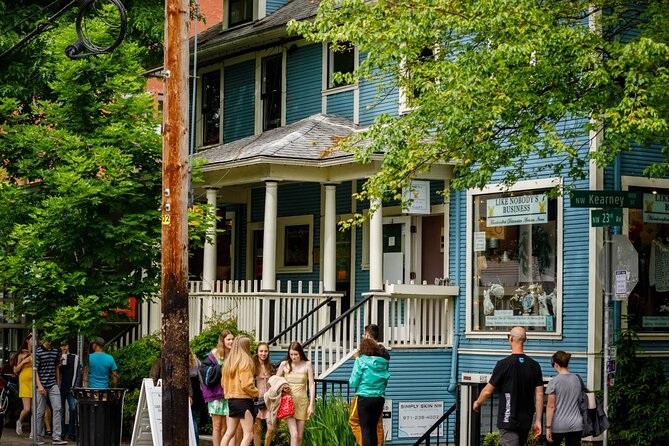
- A neighborhood-to-forest route: Old Town, Pearl District, and Nob Hill before the big green shift
- Real Forest Park size and scenery: 5,000+ acres with Douglas Fir, Western Red Cedar, and Oregon Vine Maple
- 11 miles of gravel on Leif Erikson Trail: fast, flowy-feeling riding with Willamette River views between trees
- St. Johns Bridge as a highlight: a 1,207-foot suspension bridge with “nautical” Portland pride
- North Portland variety after the trees: Cathedral Park, Mocks Crest viewpoints, and Mississippi Avenue
Meeting at Cycle Portland and lining up your bike plan
You’ll start at Cycle Portland, right at 180 NW 3rd Ave in downtown Portland. It’s set up to be easy to reach, and it ends back at the same place, so you don’t have to think about transport home.
The tour also runs with a mobile ticket, so you don’t need to hunt for a paper voucher at check-in. Since the ride is about 3 hours 30 minutes, you’ll want to show up ready to ride, not still figuring out your shoes and gloves.
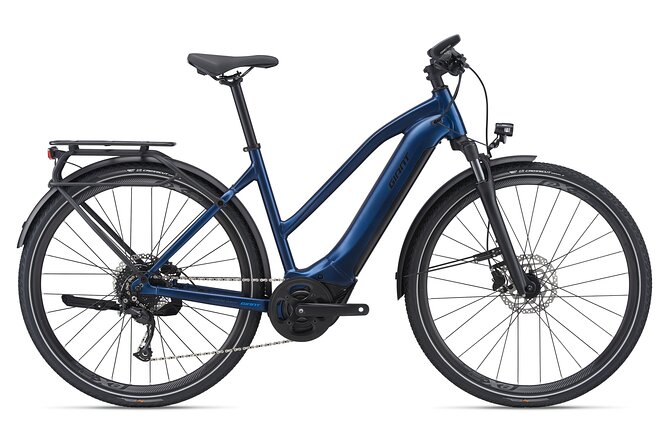
If you’re choosing between bike types, decide based on how you want to feel at the top of the climb. The carbon gravel bikes are for you if you want to work a bit and enjoy the effort. The e-bikes are ideal if you’re a newer cyclist or you want the forest views without turning the ride into a suffer-fest.
You can also read our reviews of more cycling tours in Portland
Old Town, Pearl District, and Nob Hill: a quick taste of Portland streets
Before you trade asphalt for gravel, the ride walks you through Portland’s older urban fabric. You begin in Old Town, Portland’s oldest neighborhood, where you can feel the city’s mix of food, tea-house culture, and traditional garden space. It’s a good early stop because it sets a sense of place before you speed up and start climbing.
Next comes the Pearl District, where the streets and loading-dock past still show through cobblestones and old warehouse bones. The contrast matters: even in a short visit, you get to see how Portland reinvents areas rather than wiping them out and calling it progress.
Then you roll toward Northwest (Nob Hill), an area known for Victorian-era homes turned into boutiques, galleries, theaters, and restaurants. This segment is short (about 10 minutes), but it’s strategically helpful. It keeps your eyes awake, makes the city part of the tour feel like more than just “getting there,” and helps you orient before the forest.
What to watch for: street riding means you should be comfortable with city traffic rhythms and quick turns. If you’re the type who tenses up at intersections, give yourself extra mental space early so you don’t spend the climb already anxious.
Climbing into Forest Park: the shift from city noise to tree cover
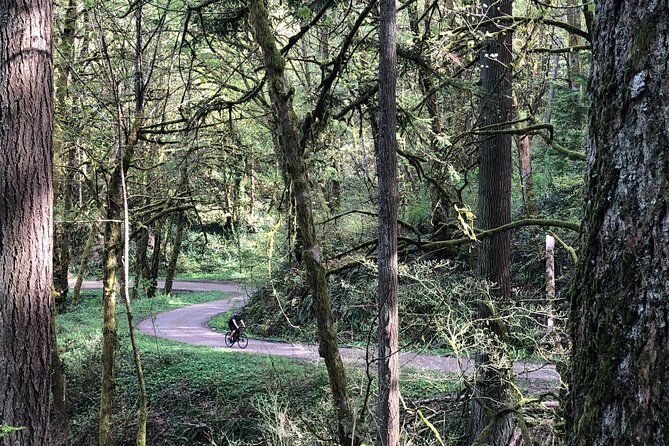
Once you start moving toward Forest Park, the tour’s tone changes fast. The route climbs up from the neighborhoods and leads you along hillside streets dotted with Victorian homes perched above the canopy.
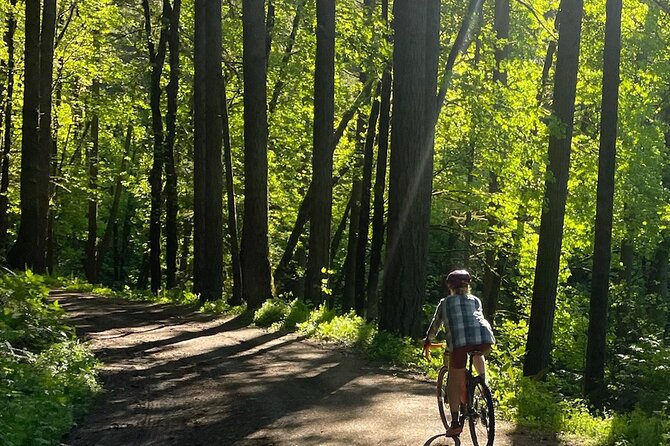
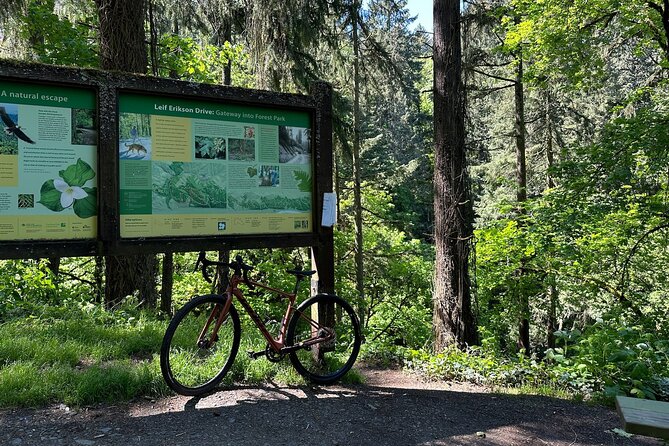
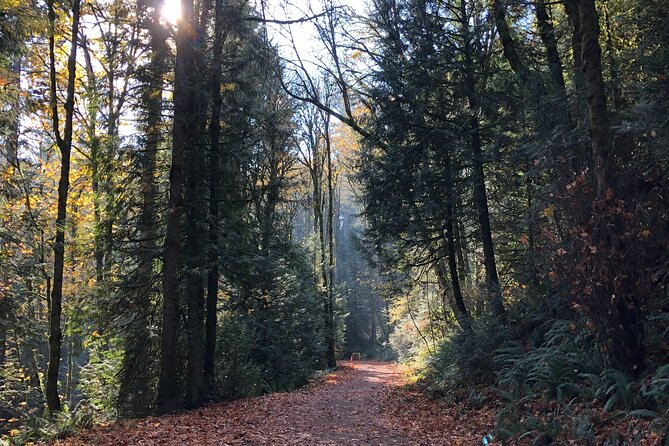
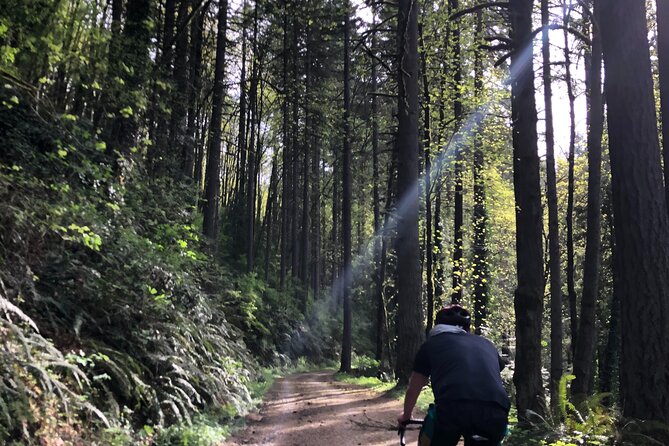
Then you enter the real draw: Forest Park, the United States largest urban forest. You’re talking about 5,000+ acres (about 2,000 hectares), and it’s planted with species like Douglas Fir, Western Red Cedar, Oregon Vine Maple, and Sword Fern along the paths. That mix is part of what makes the park feel alive, not just green.
The ride meanders through the pedestrian-friendly network at the edge of the forest, so you’re not just blasting through. You get time to notice how the light changes under the trees, and you get a chance to settle into a calmer cadence before the gravel highlight.
Who this suits best: if you want outdoor scenery without committing to a full-day adventure, this is a smart middle ground. You’ll still get a proper outdoors feeling, but the structure keeps you from feeling stranded in the woods with no plan.
Leif Erikson Trail: 11 miles of gravel and Portland views through the trees
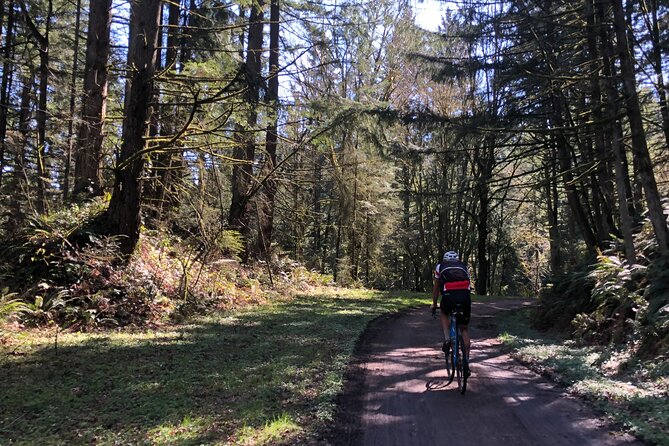
The tour’s big riding moment is Leif Erickson Trail, a ride route that spans 11 miles through Forest Park. You’ll spend about 1 hour 30 minutes on this stretch, which is long enough to feel the rhythm but not so long that you stop caring halfway through.
What I love about this section is the bike texture. The former fire lane surface gives you a bed of gravel that’s described as fast and flowy, meaning you can keep momentum without needing technical mountain-bike skills. It’s the kind of terrain where good technique helps, but you don’t have to be a pro to enjoy it.
Views are another strong reason to like this trail. Through gaps in the trees, you’ll catch Portland and the Willamette River. The key is that the views don’t demand constant effort. They pop up between turns, so you keep riding while still getting those satisfying “oh wow” moments.
How to get the most out of it: choose your line early. Gravel feels best when you’re smooth on the handlebars and steady with your body. If you’re on an e-bike, don’t treat the assist as permission to sprint at every straight. Use it to keep a comfortable pace so you finish feeling fresh, not frantic.
St. Johns Bridge to North Portland: a steel suspension moment at the right time
After the forest, you get a dramatic switch: the ride crosses St. Johns Bridge. The numbers alone are impressive—1,207 feet spanning between steel Gothic arch towers—and it’s historically notable too. When completed in 1931, it was the longest suspension-type bridge west of the Mississippi River.
But the bigger point is how the bridge changes your perspective of Portland. The ride takes you into North Portland and the former city of St Johns, and that geographic shift matters. It’s not just a crossing to connect places. It’s a visual handoff from trees to neighborhoods, from quiet to character.
The bridge is long enough that you’ll feel the difference in air and noise, even with only a short time on it. If you’re the sort of person who loves “architecture plus movement,” this is a perfect mid-tour payoff.
Potential drawback: bridges can feel windy, especially in open sections. If you’re sensitive to cold air or gusts, plan layers even in mild months.
You can also read our reviews of more tours and experiences in Portland

Cathedral Park, Mocks Crest, and Mississippi Avenue: post-ride Portland culture
Once you’re in North Portland, you get stops that feel like “this area has its own personality.” You start with Cathedral Park, one of 14 known Lewis and Clark camp locations in the city limits. It’s a relaxed place under the St Johns bridge, with a rose garden plus swimming docks and good picnic opportunities.
That park stop is short, but it’s useful. It gives you a place to cool down, hydrate, and reset your legs after the gravel. It also keeps the tour balanced by adding a more leisurely, scenic beat before the final neighborhood segment.
Next is Mocks Crest Property, a simple hilltop park with tree-shaded spots, grassy open areas, and Willamette River views. This is where you can slow down and take in the river perspective, especially if you want a few quiet minutes without the busyness of food streets.
Finally, you roll down North Mississippi Avenue for about 10 minutes. This is the “shopping and food in motion” stop, with quirky finds, popular restaurants, and music venues. The tour doesn’t linger long, but that’s intentional. It keeps things light and lets you decide what you want to revisit after the tour ends.
Tip for the end of the ride: if North Mississippi Ave catches your eye, make note of where you’d like to return. The stop is brief, so treat it like a sampler tray.
E-bike vs carbon gravel: picking the right kind of effort
One of the most valuable parts of this tour is that it doesn’t force one style of riding. You can handle the climb and forest time on a carbon gravel bike, or you can lean on battery power with the e-bike.
If you’re a novice cyclist, the guidance to choose an e-bike is clear. The ride description and the experience feedback point out that e-bikes are a smart choice for people still building confidence, especially if you’d rather spend your energy on scenery instead of grinding uphill.
If you choose the carbon gravel bike, you’ll get more satisfaction from the physical work. Gravel trails also reward smooth pedaling and calm handling, so you’ll likely enjoy the ride more if you’re comfortable staying seated and steady through bumps.
Either way, don’t overthink it on the day of the tour. If you show up feeling nervous about hills, go e-bike. If you want a workout and you feel okay on mixed surfaces, go carbon gravel.
Timing, group size, and overall value for a 3.5-hour plan
At about 3 hours 30 minutes, this tour is designed to deliver a full story without eating your whole day. You’re moving from downtown neighborhoods to the biggest urban forest, then into North Portland with bridge and park stops, all without needing a car or extra coordination.
The group size cap of 12 travelers is more than a number. It usually means less waiting, more attention from the guide, and a better chance that you’re not stuck behind someone who’s struggling to start or stop.
In terms of value, the big win is that you get guided routing and bike time on the most interesting surfaces: city blocks for context, and then Forest Park for the real scenery and gravel riding. You’re also getting a set of stops that are mostly “free to enjoy” rather than built around paid attractions.
Who gets the most out of it: couples, solo riders, and small groups who want a classic Portland mix—neighborhood character plus real outdoor time—without committing to a long multi-day trip.
Who might want a different format: if you want maximum time off-road (or no city riding at all), this probably won’t feel like enough. It’s a highlight ride, not a full-on endurance expedition.
Should you book this Forest Park Carbon Gravel Bike and E-Bike Tour?
I’d book it if you want the best of Portland in a single half-day: forest scale, gravel riding on Leif Erickson Trail, a major bridge crossing, and North Portland stops that feel like they belong to the city rather than tourist theater.
Choose e-bike if you’re new to cycling, you’re visiting with limited stamina, or you just want to spend the day enjoying views. Choose carbon gravel if you like a moderate challenge and you can handle hills and mixed surfaces.
Skip it only if you dislike any hills and you’re assuming you’ll be on flat ground the whole time, or if you’re traveling during a period when weather is frequently chaotic and you’d rather avoid the chance of a reschedule.
FAQ
How long is the Forest Park carbon gravel and e-bike tour?
The tour is about 3 hours 30 minutes.
Where does the tour start and end?
It starts at Cycle Portland, 180 NW 3rd Ave, Portland, OR 97209, and it ends back at the meeting point.
How much of the ride is gravel?
You’ll ride about 11 miles on Leif Erikson Trail, which is a former fire lane with gravel.
Is the tour suitable for beginners?
The tour is designed for riders with moderate physical fitness, and e-bikes are recommended for novice cyclists.
What bike options are available?
You can ride a carbon gravel bike or an e-bike.
What language is the tour in?
The tour is offered in English.
You Might Also Enjoy


More Cycling Tours in Portland

More Tours in Portland
- The Real Portland Tour: City and 3 Lighthouses Historical Tour with a Real Local
★ 5.0 · 1,448 reviews

More Tour Reviews in Portland
- The Real Portland Tour: City and 3 Lighthouses Historical Tour with a Real Local
★ 5.0 · 1,448 reviews