REVIEW · PORTLAND
Explore Columbia River Gorge Half-Day Small-Group Tour
Book on Viator →Operated by Terran Travels · Bookable on Viator
Waterfalls roll by fast on this Gorge route. I like that you skip the headache of driving and parking while still getting a focused hit of the Columbia River Gorge in about 3 to 4 hours. I also love the small-group size (up to 14), plus the practical touches like snacks, bottled water, and a PA system so everyone can hear the guide.
The main thing to consider is time. Most stops are brief (often 10–20 minutes), so if you want long hikes or you like to linger, you may feel a little rushed at a couple of the big-name waterfalls.
In This Review
- Key highlights you’ll care about
- Portland to the Gorge without the driving-and-parking stress
- Small-group touring: what a max-14 group really changes
- Price and value: what $89 gets you in real terms
- Stop-by-stop: the Gorge viewpoints and waterfalls you’ll actually see
- Columbia River Gorge National Scenic Area: a wide-open start
- Columbia River Highway: the Swiss-Alps vibe of a Gorge road
- Sandy River pull-by: glacier-fed, dam changes, and salmon stories
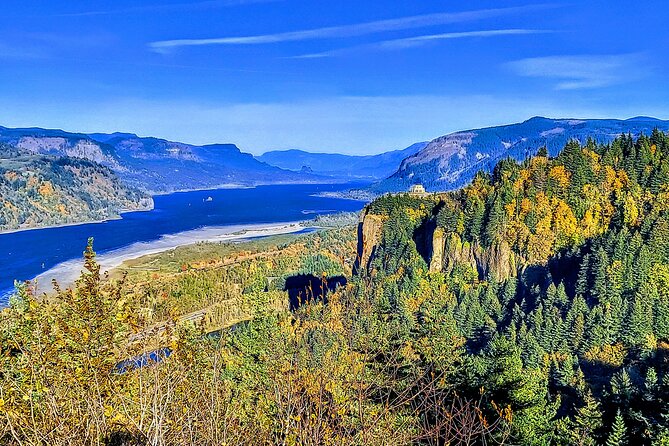
- Portland Women’s Forum State Scenic Viewpoint: the classic Gorge photo
- Vista House: 360-degree balcony + truly practical restrooms
- Latourell Falls: the hanging waterfall and the lichen detail
- Shepperd’s Dell State Natural Area: small cove, big photo payoff
- An old logging ghost town with a waterfall nearby, plus a bridge walk
- Multnomah Falls: the big one, with the time to match it
- A fault-created slot canyon: plants that only grow there
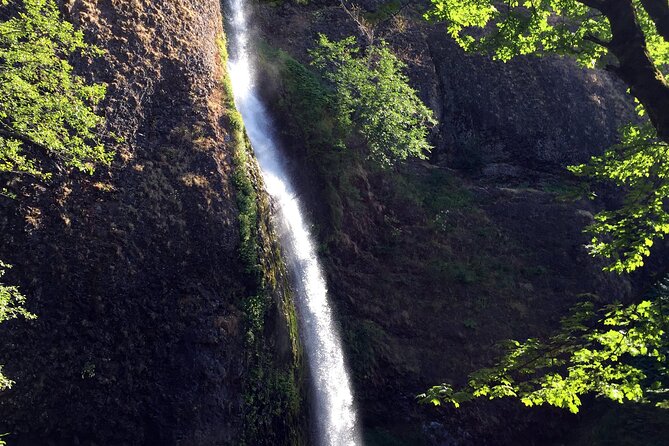
- Horsetail Falls: the quirky, quick-photo waterfall
- The basalt monolith viewpoint tied to a nudist tradition
- How to make the most of short stops (without feeling rushed)
- What kind of traveler should book this half-day Gorge tour?
- Should you book the Columbia River Gorge half-day tour?
- FAQ
- How long is the Columbia River Gorge half-day small-group tour?
- How much does the tour cost?
- What is the group size limit?
- Are admission fees included for the stops?
- What’s included in the tour price?
- Where do I meet the tour in Portland?
- Do I need to drive or park myself?
- Is the tour offered in English, and do I get a mobile ticket?
- What if the weather is bad or I need to cancel?
Key highlights you’ll care about
- Up to 14 people means a calmer pace and easier photo stops
- The guide drives along key Gorge roads so you’re not hunting parking
- Snacks, bottled water, and AC keep the half-day comfortable
- Vista House with a 360-degree balcony plus notably good restrooms
- Waterfall stop variety from hanging falls at Latourell to the big sweep at Multnomah
- Guides such as Marcus and Phil tend to bring lots of gorge stories, history, and plant talk
Portland to the Gorge without the driving-and-parking stress
If you’ve ever tried to tackle the Columbia River Gorge by car, you already know the problem: there are great viewpoints, but traffic and parking can turn a scenic plan into a scavenger hunt. This tour solves that. You ride in an air-conditioned vehicle, and your local guide handles the route and timing so you can just focus on seeing.
You also start in a clear place: Director Park, 815 SW Park Ave, Portland. Being near transit is a bonus if you’re not in a rental-car mood. From there, you head straight into the gorge corridor, where the sights start stacking up quickly.
You can also read our reviews of more tours and experiences in Portland

Small-group touring: what a max-14 group really changes
A half-day tour can be either pleasant or chaotic. The difference here is the cap of 14 travelers. In practice, that usually means less waiting at pull-offs and more flexibility when it comes to taking photos or stepping out for quick overlooks.
It’s also built for group sound. There’s a PA system in the vehicle so people in back can actually hear directions and stories. That matters when you’re trying to line up the next stop—especially with short time windows.
And if you’re the type who likes to ask questions, a smaller group gives you a better shot at real back-and-forth. Past guides (including Marcus and Phil) have been praised for sharing lots of detail about geology, plants, and local lore, which makes the scenery feel more connected instead of just scenic.
Price and value: what $89 gets you in real terms
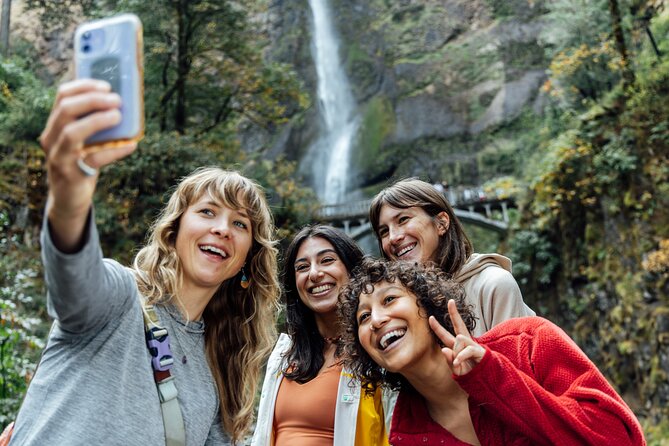
At $89 per person for about 3 to 4 hours, this isn’t a budget bus ride. The value comes from what’s included and how efficiently the tour is structured.
Here’s what you get without extra charges:
- Bottled water and snacks
- Air-conditioned vehicle
- Guide-led driving
- A PA system
- Stops where the itinerary lists free admission
That combination is the key. You’re paying for logistics and interpretation: the guide’s route knowledge, the timing between lookouts, and the ability to see multiple major Gorge stops without taking on the planning load yourself.
If you’re visiting Portland on a tight schedule, the biggest “value” is time. A half-day gives you a strong overview—waterfalls, classic viewpoints, and a couple of short nature walks—without turning into an all-day driving project.
Stop-by-stop: the Gorge viewpoints and waterfalls you’ll actually see
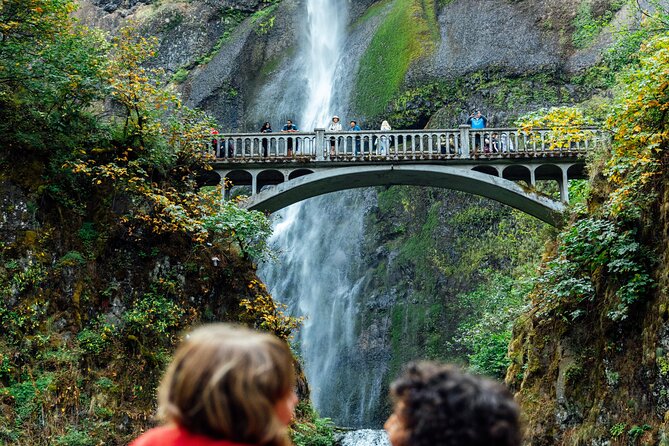
This tour works like a highlights reel, but it’s not a drive-by slideshow. You get a mix of broad outlooks and real waterfall time, with short walks where it makes sense.
Columbia River Gorge National Scenic Area: a wide-open start
Your first stop is the Columbia River Gorge National Scenic Area, right at the eastern edge of the Portland metro area. This is where you get your bearings fast—big-scale river scenery, dramatic walls, and that sense of the gorge’s scale.
It’s also a good mental warm-up. Even early on, the guide’s explanations about why the gorge looks the way it does can make the later stops feel less random and more like chapters in the same story.
- The Real Portland Tour: City and 3 Lighthouses Historical Tour with a Real Local
★ 5.0 · 1,448 reviews

Columbia River Highway: the Swiss-Alps vibe of a Gorge road
Next you ride segments of the Columbia River Highway—a road inspired by the Axenstrasse in the Swiss Alps. Translation: the design reflects a classic viewpoint-and-curve philosophy, not just a straight shot from A to B.
You’ll want to stay alert on these road stretches. The whole point of this segment is that the views open in bursts, so sitting ready with your camera can pay off more than you’d expect.
Sandy River pull-by: glacier-fed, dam changes, and salmon stories
You’ll parallel the Sandy River while driving the western portions of the Columbia River Highway. The Sandy’s headwaters are a glacier on Mt. Hood, and the river is known for Steelhead and Chinook runs.
You’ll also learn that dam removals have happened since 2007, which connects this section to the bigger theme of how river changes shape ecosystems. It’s not just trivia—hearing how the landscape and wildlife are linked makes the next waterfall stops feel more meaningful.
Portland Women’s Forum State Scenic Viewpoint: the classic Gorge photo
If there’s one spot built for a postcard-style shot, it’s this one. The Portland Women’s Forum State Scenic Viewpoint is your chance at that quintessential Gorge frame.
This stop is short, so treat it like a photo-and-quick-look stop. Take your wide shot first, then turn for the details the guide points out—usually that’s where you’ll get the most value from a brief window.
Vista House: 360-degree balcony + truly practical restrooms
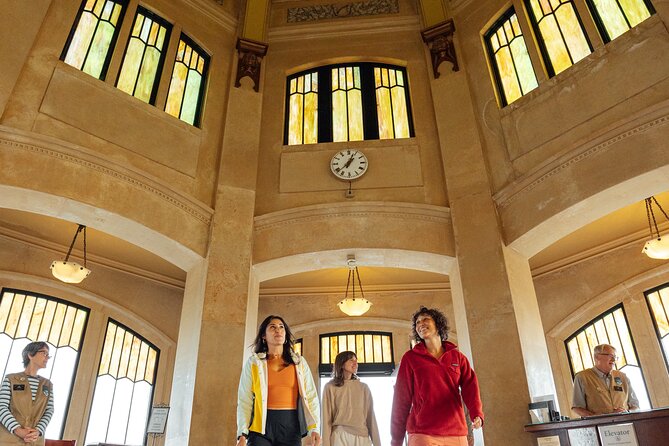
Then comes a stop that many people remember for more than photos: Vista House. It sits on a basalt point above the Columbia River and offers a 360-degree balcony. You also get historical interpretation on-site, along with the kind of restrooms that actually help on a half-day schedule.
Vista House is also a great place to pause and reset. After a few moving stops, this one gives you a structured viewpoint moment where you can take in the river, the gorge walls, and the way the highway threads through it all.
Latourell Falls: the hanging waterfall and the lichen detail
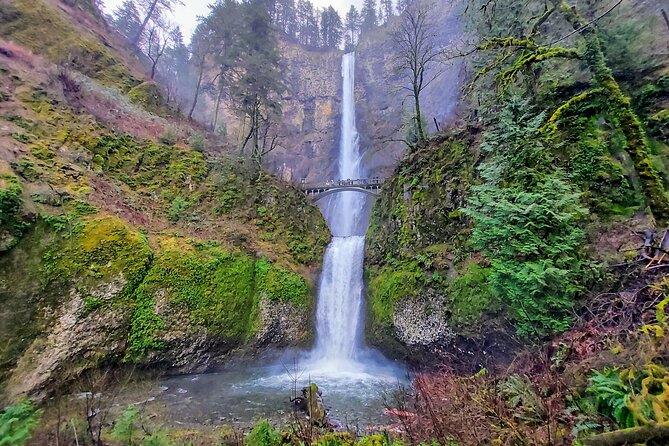
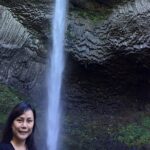
You’ll walk a bit from the vehicle to Latourell Falls, a 249-foot hanging waterfall. What makes it special is the combination of height and texture: you’re seeing a waterfall that’s affected by the gorge’s basalt geology, and the scene includes fluorescent lichen mentioned as part of what makes it visually distinctive.
Time is about 20 minutes, so plan on quick steps to get your angle, then spend a few minutes watching how the mist and flow look from different positions.
Shepperd’s Dell State Natural Area: small cove, big photo payoff
Next is Shepperd’s Dell State Natural Area, a small cove that’s known for giving you a “how is this hiding here?” feeling. Even though you’re not spending long, you can get a sense of sheltering forest and a more intimate view compared to the big open lookouts.
This is the kind of stop that rewards slow feet. If you hurry straight through, you miss the charm.
An old logging ghost town with a waterfall nearby, plus a bridge walk
You’ll also stop at an area described as an old logging ghost town from the 1880s, with a waterfall, an operating post office, and a circa-1920s B&B. Right nearby is a short switch-back trail through hemlock and Douglas-fir that leads to a bridge at the base of the falls.
Even if the trail sounds brief, this is the part of the tour where your posture matters: stop, look down to see the bridge-and-falls angle, then look up to catch how the gorge vegetation frames the scene. It’s a nice contrast to the bigger waterfall drama later.
Multnomah Falls: the big one, with the time to match it
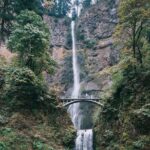
Then you hit Multnomah Falls, described as Oregon’s tallest waterfall, with a combined height of 620 feet. This stop is about 30 minutes, which is enough to reach a viewpoint, take photos, and actually take in the scale.
Here’s the practical move: start with your widest view from where you’re positioned, then move to a second angle if it’s available and safe. Big waterfalls look different depending on your viewpoint height and distance, and 30 minutes gives you that second look.
A fault-created slot canyon: plants that only grow there
After Multnomah, you’ll get a look at a slot canyon created by a fault, with plants growing on the walls that are found nowhere else. You won’t have hours to wander, so this stop is more about recognizing what you’re seeing: narrow rock walls, specific microhabitats, and an ecosystem shaped by geology.
If you like nature details, this is a satisfying stop because it shifts you from scenery-as-a-picture to scenery-as-a-system.
Horsetail Falls: the quirky, quick-photo waterfall
Next is Horsetail Falls, positioned as a fun, quirky photo target. The stop is about 10 minutes, so think “fast composition.” You want a couple of shots quickly, then move on—because the tour is designed to keep the momentum.
The basalt monolith viewpoint tied to a nudist tradition
Finally, you’ll view a major basalt monolith from a distance. It’s described as the fifth-largest free-standing monolith in the world, and the rock is linked to the idea that it inspired North America’s oldest continuously running nudist beach.
This is a “point the camera and enjoy the story” stop. The main value is the perspective: you’re seeing a huge geological feature from the roadside, then understanding why it’s become part of local culture.
How to make the most of short stops (without feeling rushed)
Because many stops are timed—often 10 to 20 minutes—your personal strategy matters.
- Wear grippy shoes. Some stops involve short walks and uneven ground near viewpoints.
- Bring layers. The Gorge can feel cooler in shaded areas, even when Portland feels mild.
- Use the vehicle time well. The PA system helps, and these guides often share what to watch for at the next stop—listen for it.
- Prioritize what you care about most. If your heart is set on waterfalls, aim to spend your extra minutes around Latourell Falls and Multnomah Falls where you’ll have the most payoff.
If you’re someone who loves long hikes, you might find this half-day format a bit too brisk. But if you want an efficient sampler of the Gorge’s top sights with a guide driving and explaining, this works well.
What kind of traveler should book this half-day Gorge tour?
This is a strong fit for:
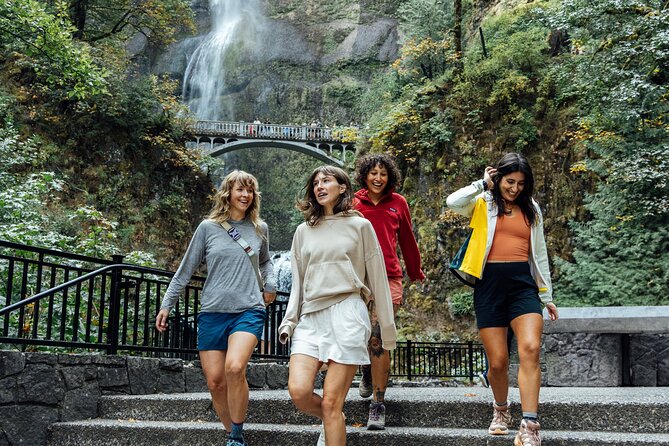
- First-time Portland visitors who want multiple waterfalls in one afternoon
- People who prefer guided viewpoints over self-planning
- Couples, small families, and solo travelers who enjoy photo stops but don’t want a full-day itinerary
It’s less ideal if:
- You want to build a detailed hiking route and stay as long as possible at each waterfall
- You’re expecting an all-in nature day with long trails and extended time outdoors
In other words, this tour is built for seeing the highlights with real context, not for turning into a long backpack outing.
Should you book the Columbia River Gorge half-day tour?
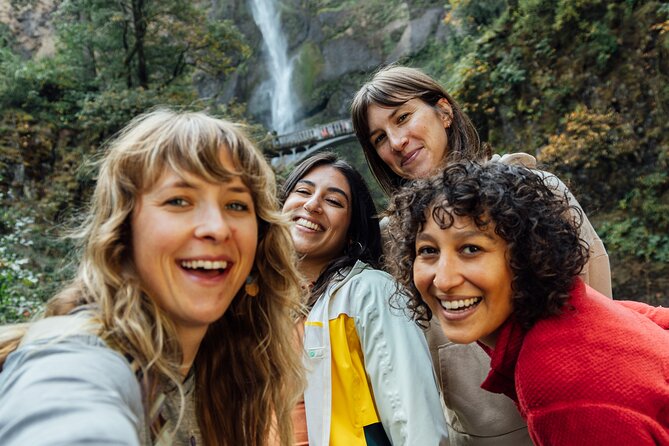
I’d book it if you want a convenient, guided Columbia Gorge overview that reduces the usual headaches of driving and parking. The mix of viewpoint variety, short nature walks, and strong stops like Vista House and Multnomah Falls makes it a smart choice for a half-day window.
I’d hesitate if your priority is slow pacing. Some stops are brief by design, and conditions like weather or timing can affect how comfortably you move between them. Since the experience requires good weather, plan your day with flexibility—if clouds or rain roll in, the tour may adjust or shift.
Overall: if you’re the kind of traveler who wants to check off the Gorge’s biggest waterfall icons, learn a bit along the way, and not spend your time playing parking roulette, this one deserves a spot on your Portland plan.
FAQ
How long is the Columbia River Gorge half-day small-group tour?
It runs about 3 to 4 hours.
How much does the tour cost?
The price is $89.00 per person.
What is the group size limit?
The tour has a maximum of 14 travelers.
Are admission fees included for the stops?
The itinerary lists the stops with free admission.
What’s included in the tour price?
You’ll get an air-conditioned vehicle, bottled water, snacks, and a PA system so everyone can hear the guide.
Where do I meet the tour in Portland?
The meeting point is Director Park, 815 SW Park Ave, Portland, OR 97205.
Do I need to drive or park myself?
No. You ride in the vehicle, and the guide drives between the Gorge stops.
Is the tour offered in English, and do I get a mobile ticket?
Yes, it’s offered in English, and you’ll receive a mobile ticket.
What if the weather is bad or I need to cancel?
The tour requires good weather. If it’s canceled due to poor weather, you’ll be offered a different date or a full refund. You can also cancel for a full refund up to 24 hours before the start time.
You Might Also Enjoy
More Half-Day in Portland
More Tours in Portland
- The Real Portland Tour: City and 3 Lighthouses Historical Tour with a Real Local
★ 5.0 · 1,448 reviews
More Tour Reviews in Portland
- The Real Portland Tour: City and 3 Lighthouses Historical Tour with a Real Local
★ 5.0 · 1,448 reviews