REVIEW · PORTLAND
A Guided Walking Tour of Fabulous Downtown Portland, Oregon
Book on Viator →Operated by Peak Tours and Transit · Bookable on Viator
Portland in two hours beats a museum pass. This guided walking tour is a tight, story-led loop through downtown—covering iconic squares, public art, and the Willamette River—built for the way you actually experience a city on foot with an experienced local guide and a 1.5-mile walk. I like how the route connects Portland’s past to what you see today, plus how often the stops are about real street-level culture, not just famous backdrops.
One thing to consider: the exact path and emphasis can vary by guide, and if you were hoping for constant building-by-building architectural talk the whole time, you might feel a few stretches lean more toward parks and outdoor art.
In This Review
- Key highlights worth planning for
- Starting at Pioneer Courthouse Square: the downtown anchor
- South Park Blocks: when downtown turns into a green corridor
- Oregon Historical Society and the Richard Haas mural
- Portland’5 Centers for the Arts: the best planned restroom stop
- The oldest art museum in the Pacific Northwest: Pietro Belluschi’s design
- Whimsical sculptures, then the Portland Building moment
- Portlandia and the tiny park you’ll want to search for
- Tom McCall Waterfront Park: freeway removed, public space gained
- The finish with a historic truss bridge view
- Price and value: is $39 worth it?
- What this tour feels like in real time
- Who should book (and who might want to skip)
- Should you book this Downtown Portland walking tour?
- FAQ
- How long is the guided walking tour?
- How much walking is involved?
- What does the tour cost?
- Where do we meet and where does the tour end?
- Is this tour private?
- Are the stops free to enter?
- Is there a restroom stop?
- What’s the weather requirement?
Key highlights worth planning for
- A 1.5-mile downtown loop that fits a short day (about 2 hours on foot)
- Pioneer Courthouse Square to the waterfront route keeps you moving through the core
- Public art is part of the storytelling, not a side quest
- Multiple free outdoor stops mean your time stays focused on seeing, not paying at every corner
- A real restroom option when the theater is open at Portland’5 Centers for the Arts
- Historic bridge views at the finish, giving you a strong last image before you wrap
Starting at Pioneer Courthouse Square: the downtown anchor
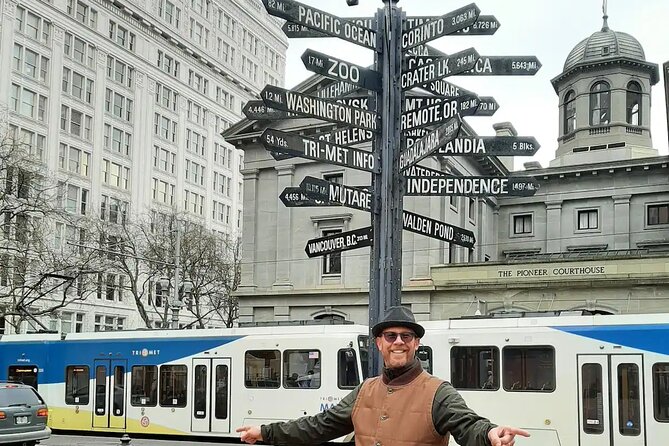
Your tour begins at Pioneer Courthouse Square, right at 701 SW 6th Ave. You’ll meet across the street from a historic federal building—the oldest federal building in the Pacific Northwest—and then quickly step into the heart of downtown life.
Pioneer Courthouse Square matters because it’s not a background. It’s a full 40,000-square-foot public space in the middle of downtown Portland. On a walking tour, that kind of central “stage” helps everything else make sense: the square sets the pace, and from there you get a practical sense of how Portland organizes its civic life—what’s central, what’s pedestrian-friendly, and where people naturally gather.
This is also a good spot to settle in. Even if you’re jet-lagged or short on time, you’ll leave the start with an easy mental map of the area you’re about to walk.
You can also read our reviews of more walking tours in Portland


South Park Blocks: when downtown turns into a green corridor
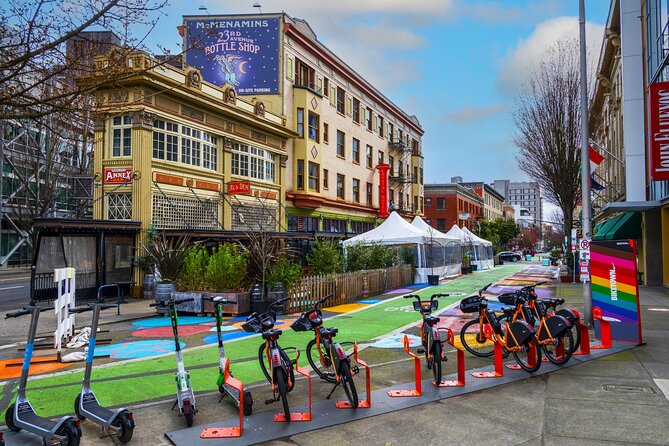
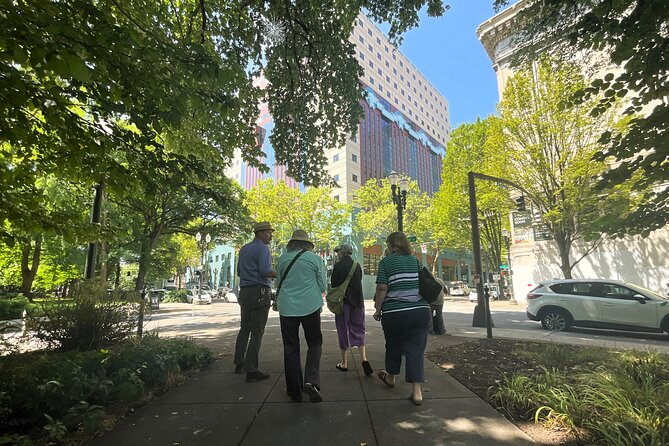
From there, you’ll head to the South Park Blocks, a set of green spaces that runs for twelve blocks. The name is literal, but the effect is bigger: this is the core of the Portland Cultural District and sits at the center of Portland State University’s greenspace.
What I like here is that it’s not just pretty landscaping. The park stretches are lined with elm, oak, and maple trees, and the public art around you turns a simple walk into something more like exploring a living outdoor gallery. You’ll also pass an ornate fountain and sculpture within the South Park Blocks—exactly the kind of detail that makes Portland feel playful and arts-minded even when you’re just moving between major stops.
If you’re a “show me the architecture” person, this part can be a mixed bag. There’s plenty to look at, but the explanation may shift toward how the city uses public space rather than a deep dive on every building façade. Still, you’ll likely enjoy it if you like your city tour to include breathing room.
Oregon Historical Society and the Richard Haas mural
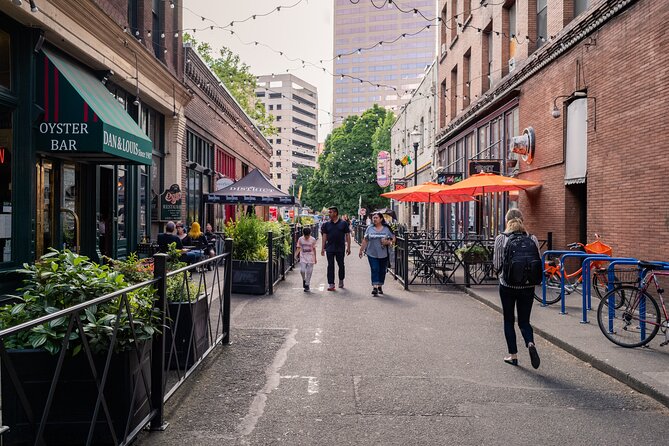
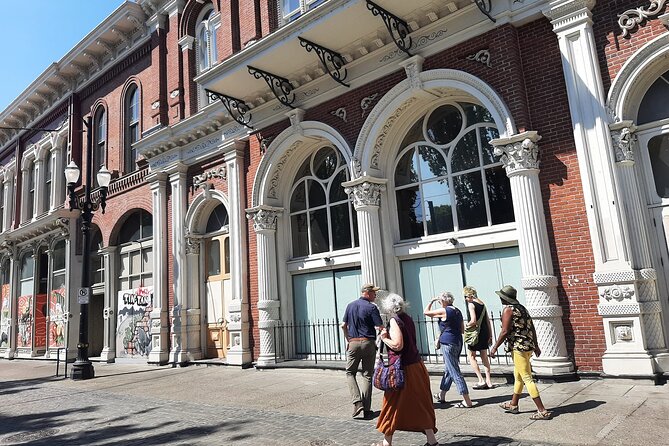
Next you’ll reach the Oregon Historical Society, founded in 1898, which draws about 44,000 visitors annually. That’s a reminder that this isn’t some dusty side collection—Portland treats local history as part of its public identity.
On the same nine-story building, you’ll see a large, two-part mural called Oregon History, painted by Richard Haas. This stop gives you a clean “how we got here” moment. Even though murals are visual, they’re doing a job: they translate big time periods into something you can read while standing in the flow of downtown life.
Practical tip: if you’re taking photos, look for the parts of the mural that align with your viewing angle from the sidewalk. Murals like this can change how readable they are depending on where you stand.
Portland’5 Centers for the Arts: the best planned restroom stop
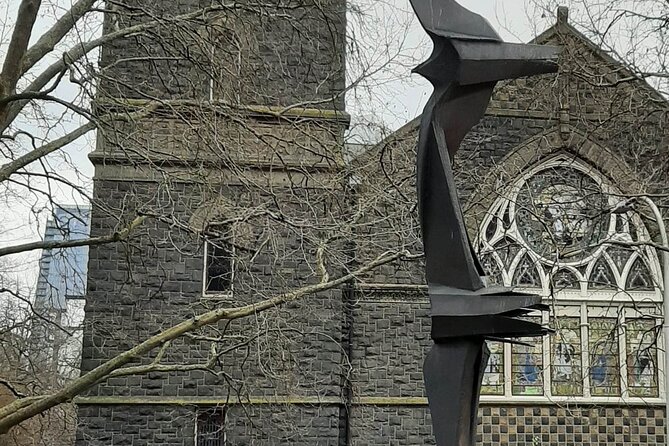
About mid-tour, you may use Portland’5 Centers for the Arts as your restroom break—when open. It’s also one of those places where “modern theater” doesn’t mean sterile. In the lobby, you’ll find public art, and the building is known for the impressive spectral light dome ceiling.
Even if you’re not planning to catch a show, this stop helps break up the walk and gives your eyes a different type of design. It’s a quick reset before you return to more outdoor landmarks.
If the theater happens to be closed on your date, your guide will adjust, so don’t treat this as a guaranteed “you’ll always have this exact restroom” moment. But when open, it’s a genuinely useful and good-looking pause.
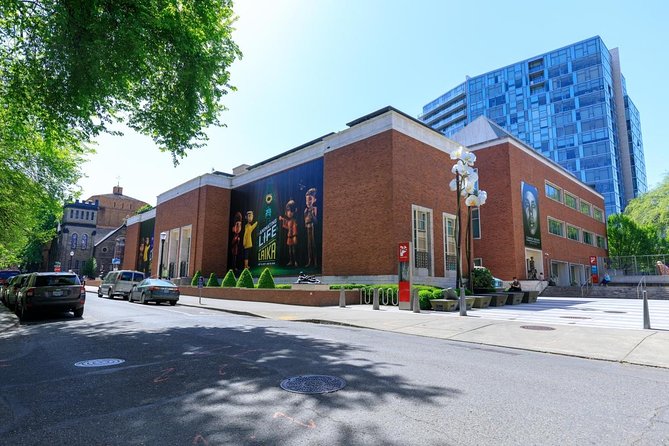
The oldest art museum in the Pacific Northwest: Pietro Belluschi’s design
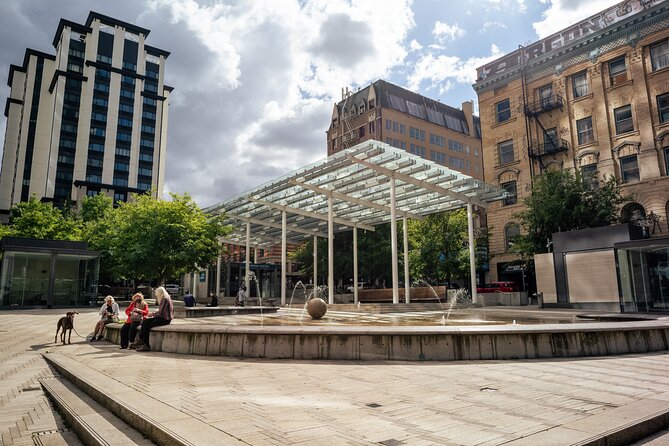
You’ll then stop at what’s described as the oldest art museum in the Pacific Northwest, designed by Pietro Belluschi. The big theme here is simple but effective design, and how it uses materials in a way that doesn’t fight the art.
Why this matters on a walking tour: a lot of downtown tours toss you from one landmark to the next without pausing to explain why certain places feel the way they do. A Belluschi-designed museum is a perfect “quiet moment” in the middle of a busy route—more about lines, materials, and proportion than spectacle.
If you’re the type who likes learning how architecture shapes your experience, you’ll likely appreciate this stop. If you’re more into street culture than formal institutions, you can still get value from it by paying attention to how the building frames public space.
You can also read our reviews of more guided tours in Portland






Whimsical sculptures, then the Portland Building moment
Downtown Portland has plenty of outdoor art, and you’ll see whimsical sculptures as you keep walking. Some are easy to miss when you’re moving fast, which is exactly why a guide helps—you slow down just enough to notice.
Then you reach the Portland Building, designed by Michael Graves. This is the stop where people tend to split into two camps: love it or loathe it. That reaction is part of the point. The Portland Building is famous precisely because it looks like a post-modern statement in a city that’s also known for practical design and forward-thinking civic ideas.
A good guide will connect the building’s look to Portland’s personality—where not everything is meant to be polite or traditional. Even if you don’t love the style, you’ll probably understand why the building became a conversation piece.
Portlandia and the tiny park you’ll want to search for
Next comes Portlandia, described as the largest hammered copper statue in the United States and second only to Lady Liberty. This is the kind of stop that’s easy to photograph but also easy to underestimate until you’re standing close and realizing the scale.
From there, you’ll get to what’s described as the tiniest park in America. It’s often decorated by citizens with tiny animals, so the experience can feel a bit like walking into a mini-scene. Even if the park is small, it’s a fun example of Portland’s “people participate” energy.
This is where I’d suggest you slow down. If you hurry through the tiny details, you’ll miss what makes it memorable.
Tom McCall Waterfront Park: freeway removed, public space gained
The finale heads to Tom McCall Waterfront Park, a 36.59-acre park along the Willamette River. The name isn’t just ceremonial. It connects to a major Portland shift: Tom McCall removed a four-lane freeway so people could reach the waterfront again.
That’s a powerful idea for a walking tour. You’ve been learning how Portland changed over time—from forest to Stumptown and onward to the city it’s become—but the waterfront stop shows the modern version of that transformation. It’s infrastructure turned into public life.
You’ll also see a seasonal outdoor fountain at the park (it runs only during its season). If you’re visiting outside fountain season, don’t worry—the point of the park is the river access and the urban redesign story.
The finish with a historic truss bridge view
Your tour ends at Salmon Street Springs, 1000 SW Naito Pkwy. From your final destination, you’ll get a view of the oldest truss bridge in operation in America, plus the other fact attached to it: it’s one of Portland’s most heavily used bridges and was added to the National Register of Historic Places in 2012.
That bridge view is a strong wrap because it ties together the “history to present” theme. A bridge is both engineering and daily life—exactly the balance Portland often leans into.
Price and value: is $39 worth it?
At $39 per person for about 2 hours and roughly 1.5 miles of walking, the value comes from two things:
- A guided narrative: the route is packed with stops that explain how Portland grew and why its public spaces look the way they do.
- A private tour format: this is listed as private, meaning it’s only your group. That’s the kind of setup where questions feel easier and pacing can stay more comfortable.
Also, you’ll get a mobile ticket and the tour is near public transportation, so it’s fairly easy to stitch into a day already planned around other sights.
Two practical notes. First, guides may vary their route and emphasis, so read the itinerary as a strong plan, not a rigid script. Second, tipping is left to you; a common Portland guideline listed is 15% to 20%.
What this tour feels like in real time
I like tours that teach you where to stand and what to notice, and this one does that with frequent “look closer” moments: public squares that act like living rooms, parks that function as cultural districts, murals that make history visible, and architecture that sparks a real opinion.
In the feedback you’ll likely find people praising guides who clearly love the city and can turn architecture and culture into an easy story you remember. Names like Damon, Johnny, Matt, and Eric have shown up as excellent guide examples, and the consistent theme is that the walking pace doesn’t feel rushed—you keep enough energy to see, react, and take photos.
If you’re going to Portland for the first time and want one simple action to get oriented, this is a smart move.
Who should book (and who might want to skip)
This tour is a good fit if you:
- want a quick orientation to downtown Portland
- like public art and architecture you can actually stop in front of
- enjoy walking tours that connect history to what you see today
- want a structured route that still includes plenty of photo-friendly moments
You might hesitate if:
- you require a strict, minute-by-minute itinerary every time you walk
- you only want lots of building descriptions and not as much time in parks and outdoor art
Should you book this Downtown Portland walking tour?
Yes—if your goal is to get your bearings and see how Portland’s public spaces work, this is an efficient way to do it. The route is short enough to feel manageable, the stops are mostly free or outdoor-friendly, and the finish at Salmon Street Springs with a historic truss bridge view gives you a satisfying end photo.
If you’re picky about route consistency, choose a day with good weather (this experience requires it) and go in expecting some guide-style variation. Think of it less like a strict checklist and more like a guided way to read downtown Portland like a story—one stop at a time.
FAQ
How long is the guided walking tour?
It’s listed as about 2 hours.
How much walking is involved?
You’ll cover about 1.5 miles (2.4 km).
What does the tour cost?
The price is $39.00 per person.
Where do we meet and where does the tour end?
You start at Pioneer Courthouse Square, 701 SW 6th Ave, Portland, OR 97204, and end at Salmon Street Springs, 1000 SW Naito Pkwy, Portland, OR 97204.
Is this tour private?
Yes. It’s listed as a private tour/activity, so only your group participates.
Are the stops free to enter?
The itinerary lists several stops with admission ticket free notes (including Pioneer Courthouse Square and South Park Blocks). When an indoor stop is included, it depends on whether it’s open.
Is there a restroom stop?
There is a planned restroom stop at Portland’5 Centers for the Arts, when open.
What’s the weather requirement?
This experience requires good weather. If it’s canceled due to poor weather, you’ll be offered a different date or a full refund.
You Might Also Enjoy




More Walking Tours in Portland


More Tours in Portland
- The Real Portland Tour: City and 3 Lighthouses Historical Tour with a Real Local
★ 5.0 · 1,448 reviews





More Tour Reviews in Portland
- The Real Portland Tour: City and 3 Lighthouses Historical Tour with a Real Local
★ 5.0 · 1,448 reviews