REVIEW · PORTLAND OREGON
Portland, Oregon: Soul of the City Walking Tour
Book on GetYourGuide →Operated by Around Portland Tours · Bookable on GetYourGuide
Portland’s downtown tells stories on foot. The Soul of the City Walking Tour turns city blocks into a timeline—street layout, architecture, public art, and even the ideas behind today’s progressivism. I love how the walk connects parks and public space to the bigger forces that shaped Portland, and I also like that the guide brings the details with real personality (Nancy, Shannon, Kelly, and Rachel-style energy all show up in this tour’s guide lineup). One consideration: it is a steady 2-mile walk with a few hills and some stairs, so wear shoes you can trust and plan on taking it at an easy pace.
You’ll start in the park system and keep moving through plaza after plaza, seeing how Portland made it normal to prioritize pedestrians. You’ll learn about everything from cast-iron storefronts to the famously controversial Portland Building, plus why activists and cultural movements are part of the city’s modern identity. If you’re hoping for a totally low-effort sightseeing stroll, this isn’t that—it’s an active, interpretive walk where you’ll want to stay present.
Price-wise, $29 for about two hours is fair for a guided deep look at downtown’s layout and design decisions. The big value is context: you stop seeing random buildings and start seeing cause-and-effect.
In This Review
- Key things to know before you go
- Portland’s parks-and-architecture mix is the whole point
- Starting at Director Park (SW Yamhill & SW Park Ave) like a local
- South Park Blocks: Portland’s pedestrian-friendly center
- Cast iron storefronts and the Portland Building: the architecture storyline
- Activism, progressivism, and international headlines—how it fits into the city
- Portlandia: the city’s image, and why hippies matter
- The extravagant sculptural work you’ll notice after the tour
- Pioneer Courthouse Square: ending with the city’s center stage
- Price and time: what $29 buys you in real value
- Who should book this Portland walking tour?
- Should you book the Soul of the City tour?
- FAQ
- FAQ
- How long is the Portland Soul of the City Walking Tour?
- Where do I meet my guide?
- How much walking is involved?
- Is the tour wheelchair accessible?
- Does the tour run in rain?
- What language is the guide?
- Are there hills or stairs?
- Are dogs allowed?
- What should I bring?
- How much does it cost, and what if attractions are closed?
- What’s the cancellation and payment flexibility?
Key things to know before you go
- Director Park start point makes it easy to orient yourself fast, right by downtown’s Cultural District energy
- South Park Blocks shows Portland’s pedestrian-first planning in action, not just in theory
- Architecture talk that includes the Portland Building gives you contrast—what worked, what didn’t, and why it mattered
- Portlandia and the hippie thread connects the city’s counterculture past to what you see today
- Public art and sculpture sightings feel like clues you didn’t know you needed
- Rain or shine means you’re not waiting for perfect weather to get your bearings
Portland’s parks-and-architecture mix is the whole point
Portland is one of those places where the city plan itself feels like a personality trait. Instead of treating parks like side dishes, this tour uses them as the main course. The South Park Blocks in particular are a big part of why Portland feels walkable and relaxed in the center—tree-lined space, museum-adjacent plazas, and streets that make it easy to move without a car.
This tour also makes the built environment feel readable. You’ll look at downtown as a map of decisions: how blocks were drawn, what kinds of buildings were built, and how design choices became part of the city’s identity. If you like thinking about why a city looks the way it does, you’ll enjoy the way each stop links back to larger themes.
And yes, you’ll get the Portland-to-the-bone humor and attitude through the guide’s delivery. Even when the topic turns political—radical activism and social progressivism—most of the approach stays practical: you’ll understand what shaped Portland over decades, not just memorize dates.
You can also read our reviews of more walking tours in Portland Oregon



Starting at Director Park (SW Yamhill & SW Park Ave) like a local
Your meeting point is the northeast corner of Director Park at SW Yamhill and SW Park Ave, across from Elephants Deli on the Park, by the globe-shaped fountain. That matters because Director Park is already a clue that Portland’s downtown is not just streets and offices. It’s streets with people in them.
From there, you get into the rhythm of downtown fast. The tour is designed to help you orient yourself early, so you’re not spending the first 20 minutes trying to figure out which way the city goes. If you’re pairing this with other Portland plans, you’ll leave knowing where the plazas and cultural stops sit relative to each other.
South Park Blocks: Portland’s pedestrian-friendly center
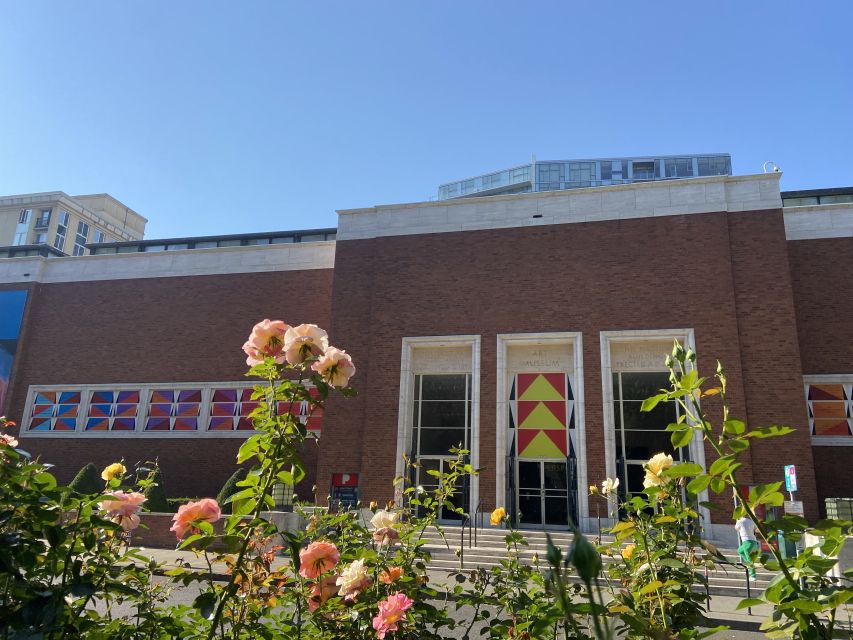
The walk flows through the South Park Blocks, including plaza areas tied to major downtown cultural stops such as the Portland Art Museum and the Oregon Historical Society. This is the part of the tour where Portland’s planning becomes obvious even if you’re not a design nerd.
What I like about focusing on this stretch is that the parks feel like infrastructure. They’re not only for scenery. They connect museums, concert venues, and civic space, which is why Portland can feel both art-forward and easygoing in the center.
You’ll also hear how the city got its nicknames and how the street layout reflects early planning choices. Even without going inside big venues, you learn how the public spaces work as a system—where people naturally gather, where the city channels movement, and why some areas feel calmer than others.
Practical tip: if the weather is overcast or cool, this park-and-plaza section still works well. Bring layers so you’re comfortable enough to listen closely instead of shivering through the explanations.
Cast iron storefronts and the Portland Building: the architecture storyline
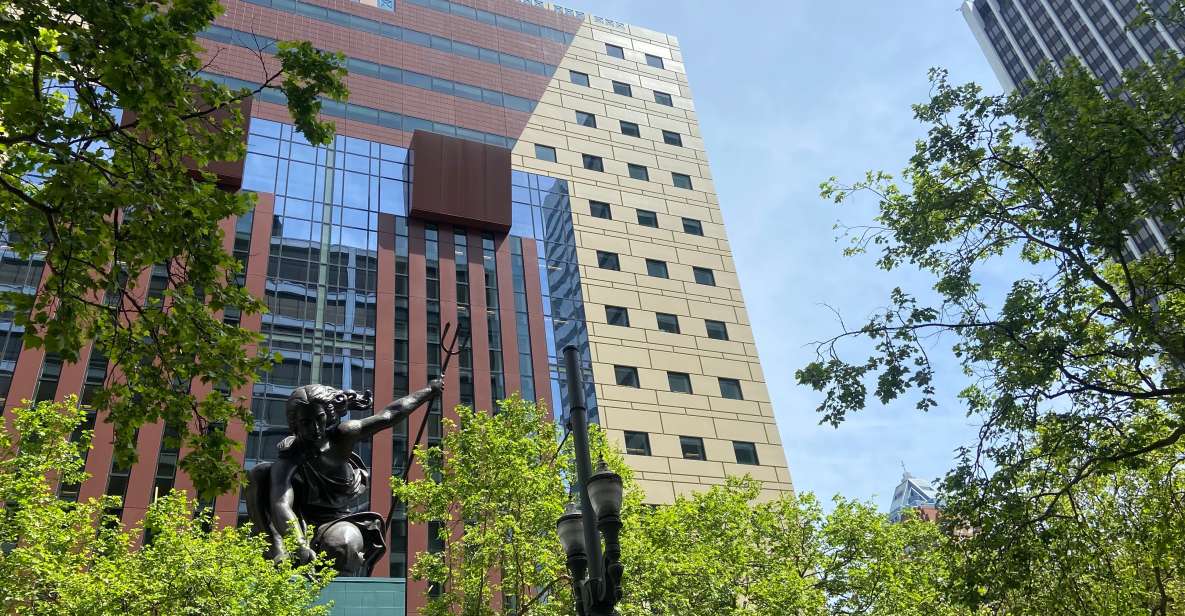
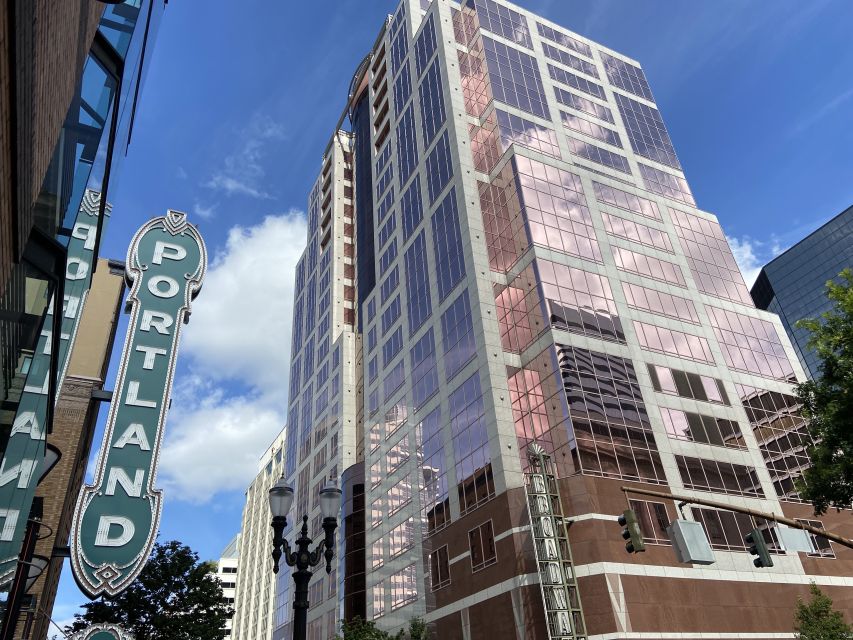
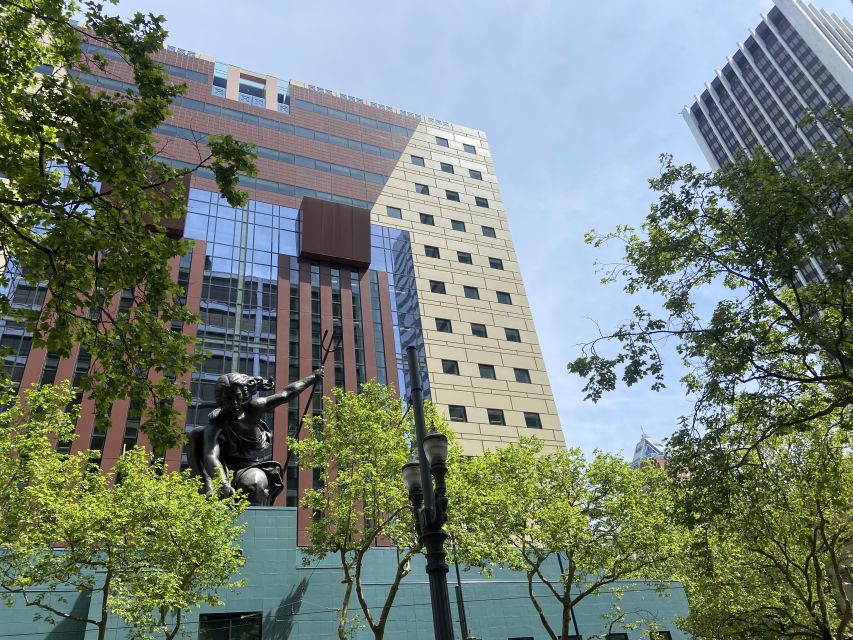
Downtown Portland has a mix of older commercial buildings and modern (sometimes controversial) design. This tour uses that mix on purpose. You’ll trace the city’s history through buildings and street layouts, with the talk landing on recognizable contrasts—cast iron-fronted structures on one end, and the post-modern Portland Building on the other.
That contrast is more than aesthetic trivia. It’s a way to talk about what the city valued at different moments—who had influence, what “progress” looked like, and how Portland’s self-image evolved. When you hear the guide explain the Portland Building as grandly disastrous, the point isn’t to roast a single building. It’s to show how ambitious ideas can age fast, and how cities learn from their own experiments.
If you’re the kind of person who looks up at facades while walking, you’ll get extra value here. You’ll spot details you’d normally miss because someone took the time to explain what they mean.
Activism, progressivism, and international headlines—how it fits into the city
Portland’s reputation for activism isn’t just a modern social media label. The tour connects radical activists and international headline moments to a longer story stretching back more than a century. The guide ties that thread to the city’s commitment to racial justice and social progressivism, showing that Portland’s culture is not random—it’s built from repeated conflicts, organizing, and responses.
This part can feel more intense than the architecture stops, but it’s handled in a way that still helps you understand the physical city. You’ll learn how ideas shaped neighborhoods, public institutions, and the tone of downtown life.
One thing I appreciate is that the narration doesn’t stay stuck in slogans. For example, guides like Nancy often bring in context about city administration and Oregon’s demography and industries. That makes the political angle feel grounded in how the city actually works.
You can also read our reviews of more city tours in Portland Oregon


Portlandia: the city’s image, and why hippies matter
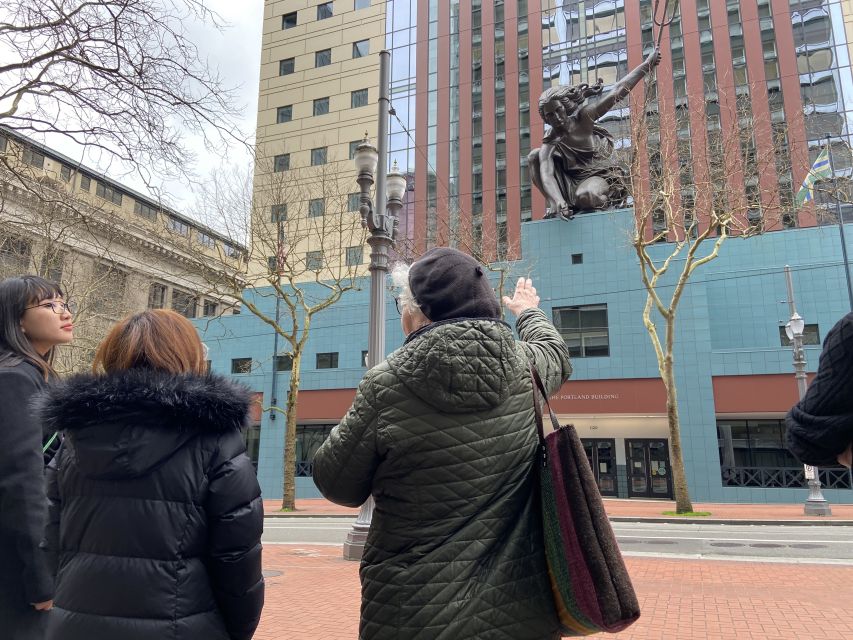
Next comes Portlandia, the image personifying the city. This is where pop symbolism and real-world culture collide. You’ll learn how much of what you see today has to do with hippies helping reshape Portland’s identity—less in the form of a museum display, more in how the city learned to make room for alternative lifestyles, artistic energy, and different ideas of “community.”
Portlandia is fun on its own, but the tour uses it as a hinge point. It helps you understand why Portland feels like it keeps one foot in counterculture even as it grows and changes. If you’ve heard the word hippies attached to Portland before and wondered whether it’s just a stereotype, this segment is your answer: it’s a visible symbol of a deeper pattern.
And it’s also a great moment to take a breath. After architecture and activism, you’ll enjoy a more human, city-story vibe.
The extravagant sculptural work you’ll notice after the tour
Downtown is full of public art, but this tour nudges you to look harder. You’ll explore Portland’s most extravagant sculptural work, described as something hidden in plain sight. That line matters: you’re not being asked to search for something obscure for an hour. You’re being trained to see what’s already around you.
The payoff is simple. After you’ve had the guide’s explanation, you’ll walk past sculptures and murals like they’re labeled. You’ll understand why certain works are there and how they connect to Portland’s broader identity—art, activism, and civic space all in one.
If you like photo opportunities, this section gives you plenty. If you don’t, you’ll still get value because you’ll stop treating public art like decoration and start treating it like local commentary.
Pioneer Courthouse Square: ending with the city’s center stage
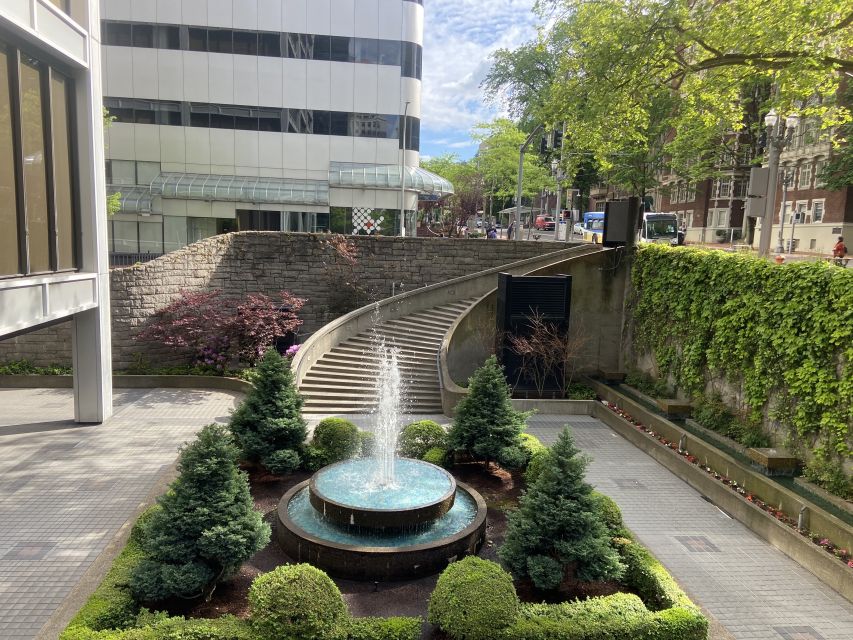
The tour ends at Pioneer Courthouse Square, a natural finish point because it feels like the civic living room of downtown. It’s big enough to be memorable, and it’s open enough that you can easily reconnect with the rest of your day.
Ending here also helps you with navigation. Once you’ve finished, you’ll have a mental map of how the city’s plazas, parks, and cultural areas connect. If you want to keep walking afterward, you’ll know where the energy is and where to return.
Price and time: what $29 buys you in real value
At $29 per person for about 2 hours, the cost is basically paying for three things:
- A guided thread through downtown, so you get meaning instead of just scenery
- Interpretive context about architecture and planning decisions
- A guide who can answer your follow-up questions and steer the story toward what you care about
This is where the guide quality matters. In the guide roster you’ll see names like Nancy, Shannon, Kelly, and Rachel, and the consistent theme is confident storytelling: lots of knowledge tied to how the city feels today. One guide even stood out for tailoring to interests while adjusting for weather—like preparing for cold wind and finding spots out of gusts—so you don’t lose the tour to discomfort.
You don’t need special museum tickets to benefit. The tour is built to be valuable outdoors. On days when attractions are open, you may get brief entry into one or two buildings, but the core experience is the walk and the explanations along the way.
Who should book this Portland walking tour?
Book this if you want a downtown orientation plus a Portland-specific mindset. It’s ideal for:
- First-time visitors who want to understand Portland beyond a checklist
- People who care about how cities plan public space—parks, plazas, and pedestrian routes
- Architecture lovers who appreciate both the wins and the messy experiments
- Anyone curious about how activism and social progress shape what you see on the street
It might be less ideal if you want a purely relaxed stroll with minimal thinking. This tour asks you to pay attention: you’ll get more out of it if you listen closely and let the explanations change how you look at buildings.
Should you book the Soul of the City tour?
Yes, if you’re the type who likes to learn how a place works. The reason this tour earns its high rating is that it does two things well: it teaches you to see downtown as a designed system, and it connects that system to culture, politics, and the long arc of Portland’s identity.
If you’re short on time, it’s also a good use of it. Two hours is enough to build a strong mental map—then you can spend the rest of your Portland days chasing what you’re most curious about. Just come ready for walking (2 miles), dress for the weather (rain or shine), and plan on a guide-driven experience where your attention is part of the deal.
FAQ
FAQ
How long is the Portland Soul of the City Walking Tour?
It lasts about 2 hours.
Where do I meet my guide?
Meet at the northeast corner of Director Park at SW Yamhill and SW Park Ave, across from Elephants Deli on the Park, by the globe-shaped fountain.
How much walking is involved?
The tour includes about 2 miles (3.5 km) of walking.
Is the tour wheelchair accessible?
Yes, it’s listed as wheelchair accessible.
Does the tour run in rain?
Yes, it operates rain or shine.
What language is the guide?
The live guide speaks English.
Are there hills or stairs?
There are a few hills and some stairs. The tour notes these can be avoided.
Are dogs allowed?
Some attractions on the tour do not allow dogs.
What should I bring?
Bring comfortable shoes and weather-appropriate clothing.
How much does it cost, and what if attractions are closed?
The price is $29 per person. On days when attractions are open, you can briefly enter 1 or 2 buildings.
What’s the cancellation and payment flexibility?
Free cancellation is available up to 24 hours in advance for a full refund, and there’s an option to reserve now and pay later.